Read a Waterfall Chart for Static Site Optimization matters only when its result can be checked. This guide narrows the task to one reproducible outcome and records the exact repository output used on PageSpeedLab.io.
Define the expected result
For Read a Waterfall Chart for Static Site Optimization, the acceptance criteria were written before editing: the production build must complete, the public route /blog/static-site-waterfall-analysis/ must remain stable, and the generated artifact must agree with the Web Performance inventory.
That distinction matters here: Read a Waterfall Chart for Static Site Optimization records an observed repository result, not a universal promise. Different accounts, browsers, networks, vaults, or hosting plans can produce a different web performance outcome.
Implementation
Work from a clean branch and inspect the existing configuration before editing. Keep the change limited to read a waterfall chart for static site optimization, preserve a rollback point, and avoid mixing unrelated optimization or taxonomy work into the same release.
Run the following evidence command from the repository root:
du -ah dist | sort -h | tail -20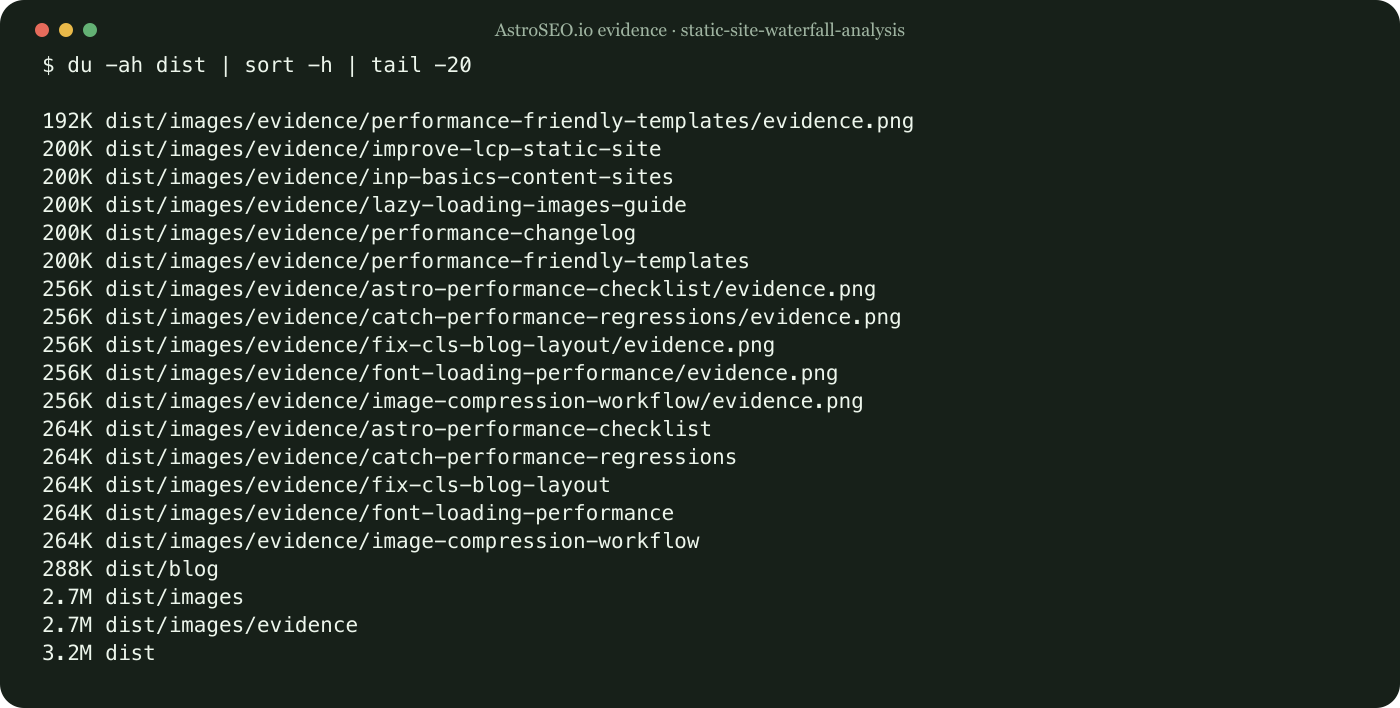
The source command and raw result for static-site-waterfall-analysis are stored beside its image. Keeping all three artifacts together makes this specific check repeatable after the site changes.
What the case demonstrated
The Read a Waterfall Chart for Static Site Optimization case was evaluated against generated output rather than a dashboard label. Its recorded files and routes give readers a concrete web performance baseline to compare with their own setup.
For Read a Waterfall Chart for Static Site Optimization, a successful save or build was not treated as completion. The final check targeted the public-facing artifact so a wrong path, stale page, missing asset, or unsupported web performance claim could still be caught.
Practical sequence
- Record the current behavior and the intended read a waterfall chart for static site optimization outcome.
- Make one focused configuration or content change.
- Run
du -ah dist | sort -h | tail -20and save the relevant output. - Inspect the generated or public artifact at the exact expected URL.
- Revert or correct the change if the same check does not improve.
Use the related implementation guide for the nearest setup dependency and the verification guide for the next diagnostic step.
Verification
Repeat the static-site-waterfall-analysis evidence command and require a successful exit. Inspect the named output directly, then confirm its links, production-origin metadata, evidence asset, sitemap entry, and RSS entry agree with the intended Read a Waterfall Chart for Static Site Optimization result.
After deploying /blog/static-site-waterfall-analysis/, verify the public response as a separate step. The local evidence proves this repository state only; it cannot establish remote DNS, cache, certificate, field-data, or account state for Read a Waterfall Chart for Static Site Optimization.
Limitations and recommendation
Read a Waterfall Chart for Static Site Optimization is scoped to the versions and repository state captured for /blog/static-site-waterfall-analysis/. Future interface, quota, policy, dependency, or network changes may require a different web performance procedure.
My recommendation for Read a Waterfall Chart for Static Site Optimization is to automate the objective check while keeping the release decision human. Preserve /blog/static-site-waterfall-analysis/, prefer direct evidence, and merge the page later if it no longer supports a distinct web performance outcome.